Muharram: The Sacred Month of Reflection, Renewal, and Spiritual Lessons
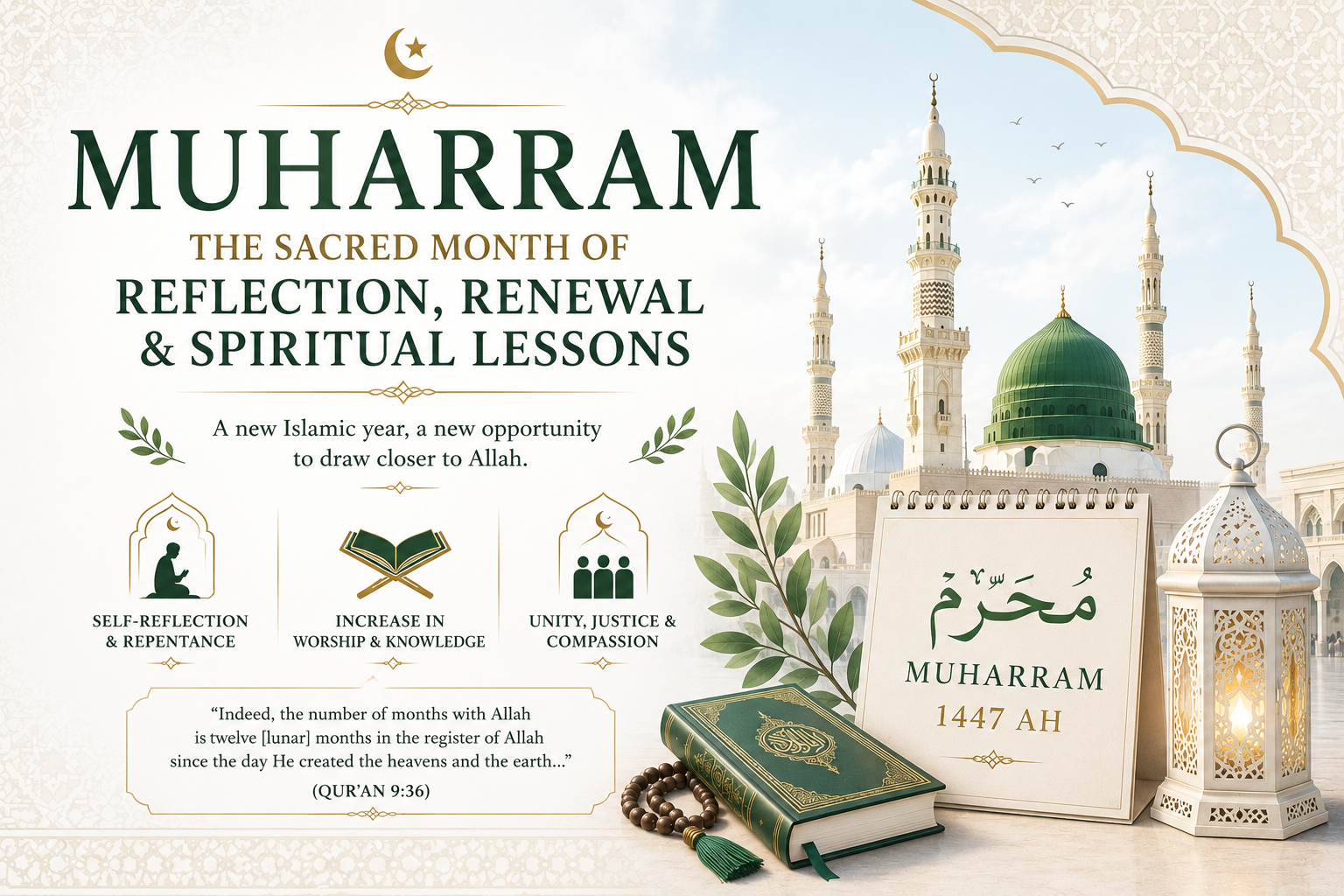
Muharram is the first month of the Islamic lunar calendar and one of the four sacred months honoured by Allah in the Holy Qur’an.
Introduction
It marks the beginning of a new Islamic year and offers believers a valuable opportunity to reflect upon their relationship with Allah, evaluate their spiritual journey, and renew their commitment to faith and righteousness.
Unlike worldly celebrations that often accompany the beginning of a new year, the arrival of Muharram invites a Muslim to engage in self-accountability (Muhasabah), repentance (Tawbah), gratitude for the blessings of the past, and sincere determination to improve one’s life in the coming days.
The sanctity of Muharram reminds humanity that time itself is a divine trust. Every moment granted by Allah is an opportunity to increase in worship, knowledge, good character, and service to creation.
The Sacred Status of Muharram
Allah Almighty mentions in the Qur’an that there are twelve months in the divine order, among which four are sacred. Muharram is one of these blessed months, along with Dhul Qa‘dah, Dhul Hijjah, and Rajab.
The Arabic word Muharram carries the meaning of something made sacred or inviolable. Historically, even before Islam, this month was respected among the Arabs and warfare was suspended during it. Islam affirmed its sanctity and emphasized that sins and acts of injustice are especially serious during these sacred periods.
The Messenger of Allah ﷺ described Muharram as “the Month of Allah” (Shahrullah), a title that reflects its unique honour and spiritual excellence.
Muharram and the Beginning of the Hijri Year
The Islamic calendar begins with Muharram, and its starting point is connected to one of the greatest events in Islamic history: the Hijrah of Prophet Muhammad ﷺ from Makkah to Madinah.
The Hijrah was not merely a physical migration from one place to another; it was a profound transformation that established a new chapter in the history of Islam. It represented sacrifice, patience, reliance upon Allah (Tawakkul), and the commitment to preserve and spread divine guidance.
Therefore, the beginning of Muharram is a reminder that every believer should undertake a personal Hijrah—leaving behind sins, harmful habits, and negligence, and moving towards obedience, sincerity, and closeness to Allah.
The Virtue of Fasting in Muharram
Among the greatest acts of worship during this month is voluntary fasting. The Prophet Muhammad ﷺ said that the best fasting after the obligatory fasts of Ramadan is fasting during the Month of Allah, Muharram.
A special virtue is attached to the Day of ‘Ashura, the tenth day of Muharram. When the Prophet ﷺ arrived in Madinah, he found the Jewish community fasting on this day in remembrance of Allah’s salvation of Prophet Musa (A.S.) and his followers from Pharaoh. The Prophet ﷺ acknowledged this connection with Prophet Musa (A.S.) and encouraged Muslims to fast on ‘Ashura.
Muslim scholars have recommended fasting the ninth and tenth days of Muharram, or the tenth and eleventh, to distinguish the Muslim practice while preserving the virtue of ‘Ashura.
The Lessons of ‘Ashura and the Legacy of Sacrifice
The Day of ‘Ashura carries many spiritual and historical lessons. It reminds believers of the victory of truth over oppression through the story of Prophet Musa (A.S.) and the destruction of tyranny represented by Pharaoh.
Muharram also carries a deep historical significance through the martyrdom of Imam Husayn ibn Ali (R.A.), the beloved grandson of Prophet Muhammad ﷺ, at the tragedy of Karbala. His sacrifice stands as a timeless symbol of courage, justice, dignity, and steadfastness in the face of oppression.
The remembrance of Karbala teaches Muslims to uphold truth, avoid injustice, and remain committed to the ethical principles of Islam even during times of hardship.
Muharram: A Month of Self-Reflection and Renewal
The arrival of a new Hijri year encourages every Muslim to pause and examine his or her spiritual condition.
Have we fulfilled our obligations towards Allah?
Have we maintained justice and kindness towards others?
Have we sought forgiveness for our shortcomings?
Have we used our time and abilities for beneficial purposes?
Muharram teaches us that true progress is not measured only by material achievements but by growth in faith, knowledge, character, and service to humanity.
A believer should begin the new year with sincere repentance, increased worship, recitation of the Qur’an, remembrance of Allah, charity, and a renewed commitment to moral excellence.
Muharram and the Message of Islamic Unity
The sacred occasions of Islam should strengthen the bonds of brotherhood, compassion, and mutual respect among Muslims. The life of Prophet Muhammad ﷺ and his noble family (Ahl al-Bayt) teach the values of mercy, patience, and dedication to truth.
The remembrance of historical events connected with Muharram should inspire deeper understanding, respect for the righteous personalities of Islamic history, and a commitment to preserving unity and harmony within the Muslim Ummah.
Conclusion
Muharram is not simply the first page of a new Islamic year; it is a sacred invitation to begin a new chapter in one’s spiritual life. It teaches the believer the values of repentance, patience, sacrifice, justice, and devotion to Allah.
The sacredness of Muharram, the lessons of Hijrah, the virtue of fasting, the message of ‘Ashura, and the legacy of the righteous personalities of Islamic history together make this month a powerful source of guidance and inspiration.
May Allah allow us to enter every new year with purified hearts, sincere intentions, increased knowledge, and a stronger commitment to His path.
قيّم هذه المقالة
ملاحظاتك تساعد بقية الطلاب على اكتشاف القراءات المفيدة.